Schönbrunn Palace Tour: Vienna’s Most Popular Attraction

By |Published On: May 7, 2026 |Categories: Austria, Destination In-Depth, Europe |
After you explore, SHARE using any of these four...
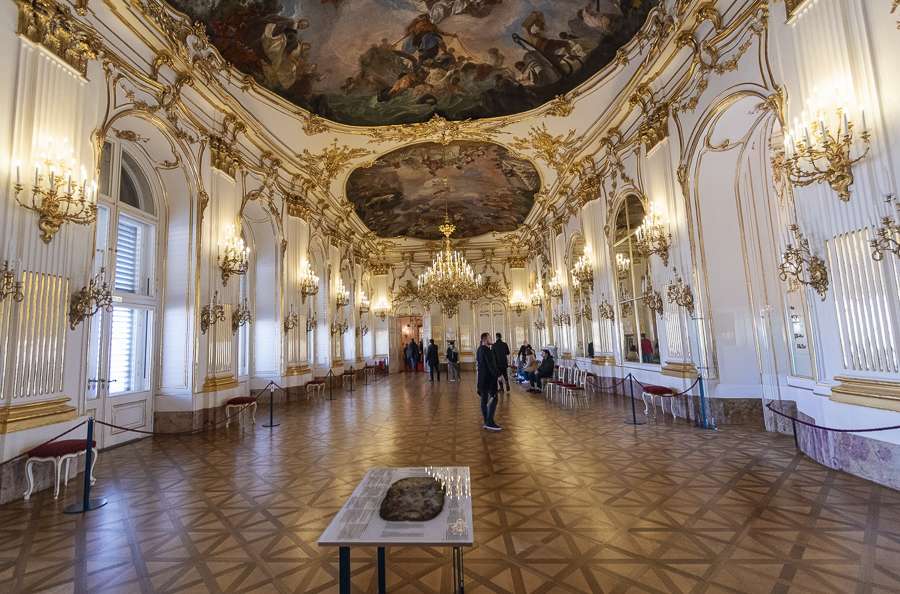
Great Gallery in Schönbrunn State Apartments at Schönbrunn Palace

Great Gallery at Schönbrunn Palace, Vienna

Our website uses affiliate links. There is no extra cost when you click through and complete a purchase. However, we receive a small commission that helps fund our ongoing travel blogging effort. For further information, review our disclosures.

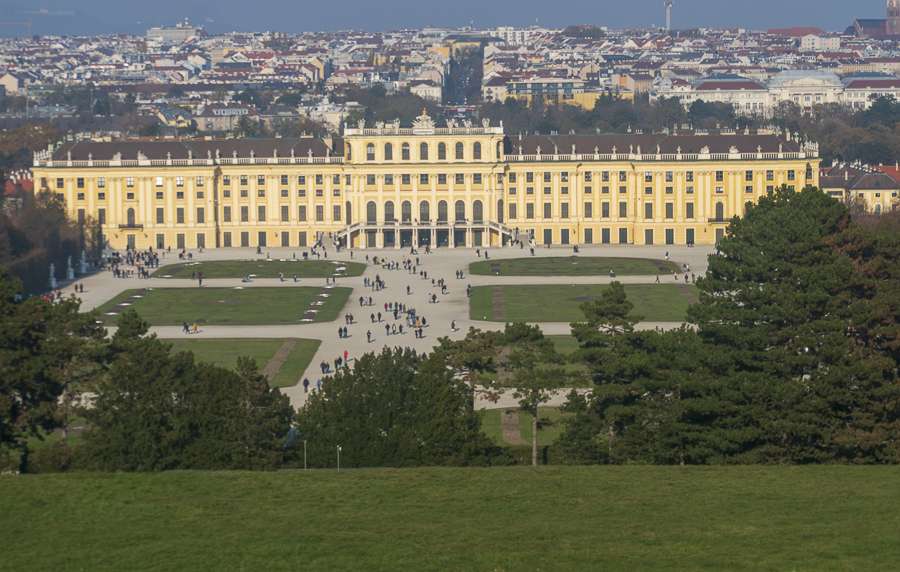
Exterior view of Schönbrunn Palace with artificial basin and the Great Parterre

Exterior View of Schönbrunn Palace and the Great Parterre, Vienna

Answering Your Questions About a Schönbrunn Palace Tour in Vienna | The Five Ws

What is the Focus of a Visit to Schönbrunn Palace?

For 600+ years, the Habsburg Dynasty controlled large parts of Central Europe and, through various alliances, extended its reach into Western Europe. Vienna was the historical center of Habsburg power, and the city retains five significant former Vienna Imperial Palaces that visitors can tour, the two most significant being Schönbrunn Palace (the Habsburgs summer residence) and Hofburg Palace (their winter residence and the political center for the empire).

As a standalone destination outside the city’s center, Schönbrunn Palace is a tribute to two of the most famous Habsburg leaders: Maria Theresa, the only female Habsburg ruler, and Franz Joseph I, the longest-serving emperor/king. Some liken the residence to the French Palace of Versailles, and the two share the Baroque architectural style. Touring Schönbrunn’s home and extensive gardens makes for a half-day (or more) for Vienna tourists.

Why You Should Prioritize a Schönbrunn Palace Tour?

Of Europe’s many great cities, Vienna has no equal when it comes to a deep Imperial history and magnificent Imperial Palaces. Although we recommend touring several of these Imperial sites, a visit to Schönbrunn Palace should be prioritized. Schönbrunn is the most popular attraction in Vienna and all of Austria.

Schönbrunn Palace is Austria’s showcase for Baroque architecture, ornate period interior décor, Habsburg history and culture, artistic works in the form of paintings and sculptures, and an outdoor space filled with numerous Gardens in the Baroque landscape style.

Most visitors begin with a guided Schönbrunn Palace tour of the 40+ publicly available rooms, a fraction of the palace’s massive footprint. The lavish Schönbrunn State Apartments, including the Great Gallery, served as ceremonial halls and public/entertaining spaces for Habsburg royalty. The rooms captivate with elaborate ceiling frescoes emphasizing the Dynasty’s legacy; wall decorations featuring distinct Asian influences; and paintings of the Habsburg family.

Beyond the centrally located Schönbrunn State Apartments, the interior tours transition to either/both the West and East wings of the home. Within these wings, visitors have the opportunity to pull back the proverbial curtain on the palace’s residential areas.

The East Wing with the Maria Theresa Apartments corresponds with her reign; Maria Theresa was the only female leader in 600+ years of Habsburg rule. The palace’s West Wing houses the former residence of Franz Joseph I and his wife, Elisabeth (better known as Sisi); Franz Joseph I was the longest-serving Habsburg ruler, with a reign lasting more than 65 years.

After departing the home, visitors can freely explore the traditional, Baroque-style gardens. Spanning hundreds of acres, the outdoor space consists of the Main Garden and numerous clearly defined smaller Gardens. Throughout the Spring and Summer months, visitors will see colorful flowers and greenery bring the Gardens to life.

Statues cover the grounds, standing atop pedestals as tributes to mythological or historical figures. Multiple embellished fountains place Greek and Roman Gods in dramatic action scenes. At the hilltop overlooking the grounds and palace, you’ll come upon the Gloriette, a colonnaded structure where you can ascend to the rooftop for the most dramatic views of Schönbrunn.

Even during the 20th century, we are reminded of Schönbrunn’s global prominence. Schönbrunn was chosen for high-profile receptions both after the signing of the Austrian State Treaty in 1955, and again in 1961 during the historic Vienna Summit between U.S. President John F. Kennedy and the Soviet Union’s leader Nikita Khrushchev.

And don’t forget to plan for the special Schönbrunn Palace events! Visitors have three entire months in Spring and Winter to experience a quintessential European “Christmas-style” market. At Schönbrunn, the markets begin early in November (and extend into early January), and there is a separate Spring market option in March-April.

Gloriette at at Schönbrunn Palace Park, part of Schönbrunn Palace history

Gloriette at at Schönbrunn Palace Park, Vienna

Where are the Vienna Imperial Palaces (Including Schönbrunn)?

Along with Schönbrunn Palace, we’ve identified four other Habsburg-connected Vienna Imperial Palaces: Belvedere Palace, Hofburg Palace, Albertina Museum, and Hermesvilla. We’ve singled out these five properties, as each is available for public tours.

Two of the locations, the Hofburg and the Albertina, are within Vienna’s Innere Stadt municipal district, which represents the city’s most historic portion, bounded by the Ringstrasse (or Ring). Belvedere Palace is just outside the Ring and is very walkable from all hotels or other locations within the Innere Stadt. All three are also readily accessible by public transportation.

In contrast, both Hermesvilla and Schönbrunn will require a taxi/rideshare or public transportation. Schönbrunn Palace is roughly 3-4 miles southwest of central Vienna’s Hofburg Palace, and if you continue in that same general direction, Hermesvilla would be an additional 3-4 miles away. Hermesvilla was built as a country retreat and, as such, requires at least one transfer when serviced by the city’s bus/train routes. This Habsburg property is located within a protected nature park, so visitors will walk nearly 1 mile from the main entrance to reach the residence.

When traveling to Schönbrunn Palace, there are multiple parking lot facilities adjoining the property or nearby. With that said, however, we strongly recommend simplifying the process by taking a rideshare/taxi or using Vienna’s public transportation.

Vienna’s subway, known as the U-Bahn, has entrances marked with blue signs and the letter “U”. Visitors should take the U4 line to the dedicated Schönbrunn stop, a 5-10 walk from the palace’s main gate. The U4 line can be taken directly from Karlsplatz, at the southern border of the Innere Stadt, a distance easily walkable from most central Vienna hotels. The U4 also has convenient connections to the U1, U2, and U3 lines, which all serve central Vienna.

During your visit, it’s best to stay in Vienna’s center, as most popular attractions are within walking distance. We recommend the Hotel Astoria Wien, just one block from the Albertina Museum and a ¼ mile from both Hofburg Palace and St. Stephen’s Cathedral.

Vienna is located in eastern Austria and within Central Europe. With a one-hour drive or train trip, you can easily reach Bratislava, Slovakia’s capital, and Austria’s beautiful Wachau Valley. Both make for excellent day trips or overnight options for tourists visiting Vienna. If you’re okay traveling a bit further, Budapest, Hungary’s capital, and Salzburg, Austria, are 2 ½ to 3 hours’ drive.

Other major European cities, including Prague, Zagreb, Munich, and Ljubljana, are 3-4 hours from Vienna. All are reachable by car, or board a train (Trainline) from Vienna Central Station, just 1 ½- 2 miles from the city center. For idea generation covering nearby Central European countries like Poland, Slovakia, and Hungary, we recommend starting with our country-specific travel guides.

In addition to a 5 day Vienna itinerary, we have thorough coverage of three other Central European countries: Poland, Slovakia, and Hungary. Focus within our Poland itinerary, involves a concentrated stay in and around beautiful, historic Kraków; for our Slovakia Itinerary, you’ll go castle-hopping, explore the surprising city of Košice, and hike in the rugged Tatra Mountains; and finally, within our Hungary itinerary, you’ll savor time in the capital city of Budapest before stepping out to the charming Tokaj wine region. Each of these destinations can be easily incorporated into a Vienna visit.

Although Vienna is a popular stop on Danube cruises, the river is not a focal point of the city’s scenery. For cruisers, we’ve got plenty of additional content covering two other likely cruise stops: the Wachau Valley region and Budapest, Hungary.

Most visitors arrive in Austria via Vienna International Airport, one of the 20 largest airports in Europe. The airport is 10-12 miles from the center of Vienna and you can reserve airport transportation through Welcome Pickups.

Although most global carriers serve the airport, Austrian Airlines uses Vienna as its primary hub. German carrier Lufthansa owns the airline and it is part of the Star Alliance, which includes United Airlines from the United States. Several of the largest American cities offer direct flights to Vienna, though some routes may be seasonal. For in-depth Austria coverage (including transportation options), see our Austria Travel Guide.

The interactive map below highlights the five diverse Vienna palace locations open to the public.

Click the map below to open interactive version

Imperial Palaces of Vienna

When are the Ideal Times to Visit Vienna and Take the Schönbrunn Palace Tour?

Schönbrunn Palace opens at 8:30 am year-round, with closing times varying from 5:00-6:00 pm seasonally. The longest opening hours are during July and August, which correspond with peak summer season crowds. If you’re booking a self-guided Schönbrunn Palace tour (supplemented by an audio guide), you will select a timed entry period in 15-minute increments throughout the day. We suggest arriving within your time period; if you arrive early, there is a cafe in Parade Court near the entrance that’s a great place to drink coffee/tea and sample some sweets/pastries while you wait.

Beyond the palace residence, Schönbrunn’s outdoor areas open at 6:30 am and close between 5:30 and 9:00 pm. While the main park and gardens are free, certain other attractions (the Maze, Privy and Orangery Gardens, and Gloriette Viewing Terrace) require separate admission tickets. These “extras” also have more limited hours, typically opening at 9:30 am and closing between 4:00 and 6:30 pm. Most of these areas are open only seasonally, from late-March through early-November, corresponding to the blooming season for plants, flowers, and trees. The park’s numerous fountains also operate on a seasonal schedule, running from mid-April to mid-October.

Visitors should be aware of several special Schönbrunn Palace events. The Schönbrunn Palace Orchestra performs classical music concerts nightly, featuring works by Mozart and Strauss. These nightly concerts begin at 8:30 pm and run until approximately 10:15 pm, and are held within the Orangery.

Schönbrunn also sponsors a signature 1x/year outdoor concert, with free admission for visitors (standing room only). The Vienna Philharmonic’s 2026 performance will take place on Friday, June 19. See our complete guide to classical music tourism in Vienna.

Two other major annual events are the Christmas Market (November 6, 2026 – January 6, 2027) and the Easter and Spring Market (late-March to late-April). Both of these Schönbrunn Palace events are open daily with hours ranging from 10 am to 7 pm/9 pm. For tourists seeking the elusive European Christmas markets, which typically open for just 6 weeks, Schönbrunn’s two markets offer a much wider attendance window!

Schönbrunn Palace offers a wide range of ticket options, including guided and self-guided tours, as well as tickets purchased directly from the Palace and through third-party suppliers. The Palace itself has three large sections of rooms available for public touring. If you choose to visit all three areas, you’ll see a total of 40 rooms; expect to be in the residence for approximately 1 ½ to 2 hours for this complete option. In addition to the Palace, you should visit the Main Garden and walk up to the Glorietta; add another 1-2 hours to properly explore the Main Garden.

Beyond these areas, you can further supplement your visit by touring additional outdoor areas or by visiting one of the many restaurants for breakfast or lunch. Given the expansive property, you will be walking long distances. As an alternative to these long walks, Schönbrunn’s Panorama Train (trolley service) regularly circles the complex, making 9 stops along the way; the round-trip transit time is 45 minutes.

Expect Vienna to see its busiest crowds during the summer, particularly in July and August, when school-age Austrian students are on break. Be aware that Austrian schools also have one-week breaks in October, February, and during the week of Easter. We have Austria’s annual holiday calendar in our Austria Travel Guide publication for reference.

Given the combination of tourist crowds, favorable weather, and other factors, mid-to-late April is the perfect time to visit Schönbrunn Palace. During this time, visitors can capture the earliest Spring flowers in bloom while taking part in the annual Easter and Spring Market. Furthermore, by mid- to late April, all potential “extras” at Schönbrunn will be open, and the fountains should be active seasonally.

We visited during November, a period with positive and negative trade-offs for visitors. During this period, you’ll encounter significantly reduced crowds (a major plus), and you’ll have early-season access to the Christmas Market, which offers one of the earliest openings in Vienna and quite possibly throughout all of Europe (another huge plus). Unfortunately, the seasonal disadvantage is that the Gardens will be dormant and greenery will have significantly disappeared for the season.

Looking for additional suggestions for your trip to Austria? Our Austria Travel Guide has hundreds of ideas and tips ranging from hidden gems to the top attractions!

Vieux Laque Room in Maria Theresa Apartments, part of Schönbrunn Palace Tour

Vieux Laque Room at Schönbrunn Palace, Vienna

Who Should Join a Schönbrunn Palace Tour?

Visitors to Schönbrunn will quickly realize… It’s very big! The Palace has 40+ rooms available for public touring; the overall grounds cover 400+ acres; and the walk from the Palace to the Gloriette is ¾ mile with 200 feet of elevation gain.

Good news, though, the Palace is acutely focused on promoting open and convenient access for all visitors. Instead of making the long walk to the Gloriette, you can board the Schönbrunn Panorama Train to help navigate the property. And while most of the garden space requires long walks, the stairs are limited to only a few areas. The Palace building is wheelchair accessible throughout, and seniors can use elevators to reach the upper palace floors. Self-guided admission options include audio guides in 22 languages.

Children between 6 and 18 years receive discounts typically ranging from 20-30% on most Schönbrunn ticket packages. Kids under 6 receive free admission to most attractions, with the onsite Children’s Museum as the notable exception.

We suspect parents will be pleasantly surprised by Schönbrunn Palace’s child-friendly options. The property’s extensive outdoor space, filled with statues and gardens, should provide plenty of entertainment and space to roam for children who need to burn off energy. If you (or your kids) need a break, there are 11 restaurants or cafes scattered throughout the property!

Beyond touring the core Schönbrunn Palace and Garden, there are plenty of adjacent alternatives, very specifically geared toward children: the Panorama Train, the Schönbrunn Zoo, the Maze at Schönbrunn, the Labyrinth (games, kaleidoscope, puzzles, and playground), and the Children’s Museum. There are unique ticketing packages that let you bundle several of these attractions for a discounted single purchase.

Neptune Fountain at Schönbrunn Palace Park, part of Schönbrunn Palace Your

Neptune Fountain at Schönbrunn Palace Park, Vienna

Schönbrunn Palace Tour: Our Personal Experience and All the Details You Need to Know

Vienna is Austria’s capital city, and it’s also the longstanding cultural capital of Central Europe. And much of this influence came under the House of Habsburg’s 600+ year rule, from architecture to classical music to the arts.

As you travel to the city, embracing the Habsburgs’ legacy starts with visiting the former Vienna Imperial Palaces. And to kick this off, we recommend starting with a half-day or full-day visit to Schönbrunn Palace.

The Habsburgs’ summer residence bears substantial imprints from two of the Dynasty’s most influential leaders, Maria Theresa and Franz Joseph I. The palace’s architecture, furnishings, décor, art, and sheer size, along with the diverse range of outdoor gardens, fountains, and statues, will drive your curiosity and stir your emotions.

Before, during, and after our return from visiting Schönbrunn, we thought deeply about what future visitors should definitely know before visiting. Read on for detailed information covering:

  • The Habsburg Dynasty
  • Schönbrunn Palace history and the key royal figures who lived here
  • A guide to visiting the property, including tour overview
  • Ticketing process and distinct Schönbrunn Palace tour options
  • Special Schönbrunn Palace events held annually
  • Comparing the different Imperial Palace visit options in Vienna

The Habsburg Dynasty Cheat Sheet

If you’re planning a visit to Schönbrunn Palace, it’s very helpful to have at least a cursory knowledge of Habsburg history. We suspect most European travelers will have this section well covered, but for other tourists (we’re talking to you, Americans), you might need an abbreviated teach-in.

At various times, the Habsburgs influenced half of the countries that comprise modern-day Europe, uniquely gaining power/lands through strategic marriages and alliances rather than typical military might. They remained in power for more than 600 years.

  • 976 – 1246: The Babenberg Dynasty marked the unofficial beginning of Austria. However, centuries of rule began to unwind when the Babenbergs lacked a male heir. The ruler’s sister would marry Bohemia’s King (representing modern-day Czechia).

  • 1273: Rudolph of Habsburg was elected to be the German King.

  • 1273 – 1282: A multi-year military conflict between Bohemia and Germany occurred during this time frame. The victorious Habsburgs would begin their centuries-long Dynasty in approximately 1282.

  • 1452: Frederick III became the first Habsburg to be named Holy Roman Emperor. The original Holy Roman Emperor was Charlemagne in 800, and the title would be bestowed for another one thousand years afterward. This Emperor title would largely remain attached to the House of Habsburg from the mid-1400s to the early-1800s.

  • 1519: Charles V becomes the Holy Roman Emperor. During his time in power, the Habsburg Dynasty had its greatest reach, extending as far west as Spain; he defended Vienna militarily against encroachment from the Ottoman Empire; and protected Catholicism when it faced challenges from the Protestant Reformation.

  • 1740: Maria Theresa became the sole female leader ever for the Habsburg Dynasty. She would initially share power with her husband, Francis Stephen I, and, after his death, share responsibilities with her son, Joseph II.

  • 1848: Franz Joseph I ascended to the throne as the leader of the Habsburgs. He would become the longest-running Habsburg ruler. During this period, he implemented the Austro-Hungarian Compromise of 1867, which created two distinct states that remained under his leadership.

  • 1898: Franz Joseph I’s wife, Elisabeth (Sisi), was assassinated in Switzerland by a well-known anarchist.

  • 1914: The presumptive heir to the Habsburg throne, Franz Ferdinand, was assassinated in Sarajevo. One month later, Austria-Hungary would declare war on Serbia, effectively starting World War I.

  • 1916: The longest tenured Habsburg ruler, Franz Joseph I, died.

  • 1918: Karl I was the final Habsburg ruler (from 1916-1918). Although he refused to abdicate formally, he signed an official declaration stating that he would no longer participate in Austrian governance. This ended nearly 640 years of Habsburg power.

Ceiling of Great Gallery in Schönbrunn State Apartments at Schönbrunn Palace

Ceiling of Great Gallery at Schönbrunn Palace, Vienna

Schönbrunn Palace History and Past Royal Residents

Schönbrunn Palace and Gardens, the Habsburgs’ summer residence outside central Vienna, is recognized as one of Europe’s best-preserved examples of Baroque architecture and design. Both for its impressive design and for its historical value, the entire property was named a UNESCO World Heritage Site in 1996.

Property History Before Maria Theresa

Historical records show that buildings on the property date back to the 14th century: farming structures, a corn mill, and vineyards were on the land. The Habsburgs didn’t acquire ownership of the land until 1569, and then it was largely used as a hunting property, with a few small buildings, including a house and horse stables.

It was not until the middle 1600s that the property took on the Schönbrunn moniker, and during this same period, a member of the Dynasty would build a country home here. However, the home did not survive long, as it and other buildings on the property sustained heavy damage from the Ottomans during the 1683 Battle of Vienna.

In the late 1600s to early 1700s, Leopold I and one of his sons, Joseph (both Holy Roman Emperors), took a significant interest in developing the Schönbrunn property. However, their focus was about creating an Imperial Hunting Lodge using the existing foundation infrastructure. An approximate 30-year construction process would result in only the central section being completed, as foreign wars and financial constraints caused significant delays.

Maria Theresa and Schönbrunn

By 1728, ownership of Schönbrunn passed to Charles VI, and it remained a hunting lodge. He gifted it to his daughter, Maria Theresa, who would transform Schönbrunn into a palace and gardens better resembling what you see today.

Charles VI died in 1740, and Maria Theresa became the de facto leader of the Habsburg Dynasty for the next 40 years, albeit sharing the role with her husband and, after his passing, with her son. There were structural limits to her official titles, but she was nevertheless the decision-maker during this time frame.

During her rule, Maria Theresa initiated a dramatic redevelopment of Schönbrunn. Work on the house began in 1743, and the East Wing’s Maria Theresa Apartments were ready by 1746. The main State Rooms – the Great Gallery and Small Gallery – plus the Blue Staircase were finished next. The construction of these rooms involved a major remodel, as they were part of the building’s prior design as a hunting lodge.

The conversion of the hunting grounds into elaborate gardens would be completed in the 1770s, including structures such as the Gloriette, the Neptune Fountain, the Roman Ruin, and the Obelisk Fountain. The Palace’s Park and Gardens would be made available to the public by 1779, approximately one year before Maria Theresa’s passing.

Schönbrunn During the 19th-20th Centuries

Following Maria Theresa’s death, the Habsburgs would not occupy the residence again until the early 1800s. Franz II/I (Holy Roman Emperor/Austrian Emperor) moved into the property and simultaneously started a major round of palace renovations. On two separate occasions, none other than Napoleon himself would take up temporary residence at Schönbrunn until a Treaty was signed in 1809 between France and Austria.

Franz II/I’s wife gave birth to a son, Franz Joseph I, at the palace. In 1848, at just 18 years old, he became Emperor, and six years later, he married Elisabeth (Sisi). Franz Joseph I would lead the Habsburg Dynasty until 1916, becoming the longest-running ruler in Habsburg history.

The Schönbrunn Palace’s west wing served as the primary residence of Franz Joseph I and Sisi; the East Wing was home to Maria Theresa and her husband, Franz Stephen I.

Pathway to gardens of Schönbrunn Palace Park

Pathway to Gardens of Schönbrunn Palace Park, Vienna

Schönbrunn Palace Tours and Ticketing Options

When choosing your Schönbrunn admission tickets, you have a wide range of options. We can help you make those difficult decisions.

  • Tickets can be purchased directly from the Schönbrunn Palace ticketing site or from a reputable third-party guide service, such as GetYourGuide. There are advantages/disadvantages to each ticketing solution.
  • Self-guided Palace tickets are available only from the Schönbrunn website. These tickets include a complimentary audio guide in 22 languages. If you want to see all 40 publicly available rooms (the State Rooms, East Wing, and West Wing), this is currently the only option.
  • If you prefer a guided tour, you will visit the East Wing (Maria Theresa Apartments) and the State Rooms. This guided ticketing option is available directly from Schönbrunn or from GetYourGuide.
  • For guided Schönbrunn Palace tours, GetYourGuide can increase your choices. For example, paying a premium to limit the group size or providing more language options (beyond English/German). Using GetYourGuide also lets you keep all your Vienna ticket purchases under a single reservations platform.

  • The main gardens at Schönbrunn are free for visitors. Many of the guided tours will take you into the Gardens and cover a portion of the space, but you’re free to explore the remainder after your formal guided tour ends.
  • Schönbrunn has a significant number of additional options adjacent to the Palace/Main Gardens: Privy Garden, Orangery Garden, Maze, Gloriette Viewing Terrace, Schönbrunn Zoo, Desert Experience, Palm House, and Children’s Museum. Although several can be purchased through third parties, most can only be obtained through the official Schönbrunn website, and they’re usually available in bundled ticket packages. We encourage you to explore these alternatives, as some may be perfectly suited to your individual/family needs and interests.

Exterior View of Schönbrunn Palace and the Great Parterre

Exterior View of Schönbrunn Palace and the Great Parterre, Vienna

The Complete Schönbrunn Tour Guide: Palace and Gardens

During our trip to Schönbrunn, we took part in the guided Maria Theresa tour, which included visits to the Schönbrunn State Apartments and the Maria Theresa Apartments. After completing the interior tour, we continued with our guide into the main gardens and spent additional time walking this area after the guided portion of our tour ended.

Schönbrunn provides an excellent map of the entire property. This map can further assist you in planning and scheduling tickets for the wide variety of onsite attractions. The map should be used in conjunction with our overviews of the primary rooms within Schönbrunn Palace and the Main Garden.

Schönbrunn State Apartments

Most Schönbrunn Palace tours begin with a walk up the Blue Staircase, the most magnificent stairway in the palace. As part of the original hunting lodge, the staircase was actually the property’s dining room before Maria Theresa began renovations on Schönbrunn.

You’ll pass through two smaller connecting rooms before entering the star attractions in the Schönbrunn State Apartments, the Great Gallery and the adjacent Small Gallery. These rooms have hosted some of the most important receptions in 20th-century Austrian history: 1) after the signing of the Austrian State Treaty in 1955 and 2) as part of the strategic summit between JFK and Khrushchev in 1961.

The Great Gallery is 141 feet long and 33 feet wide. Spend time studying the three primary ceiling frescoes depicting scenes offering wide-ranging symbolism about the Habsburg Dynasty. Take your time here because there will certainly be crowds, but also periods of relative calm as large tour groups move in and out of the room. Be sure to notice the smaller things, like the wall sconces, windows, and mirrors. Within the Small Gallery, see the busts of Maria Theresa’s daughters (you may be familiar with one of them, in particular… Marie Antoinette!).

Two similarly designed rooms, the Round Chinese Cabinet and Oval Chinese Cabinet, flank both sides of the Small Gallery and are strongly influenced by Chinese and Japanese cultures.

The final two rooms within the Schönbrunn State Apartments, the Carousel Room and Hall of Ceremonies, served as buffer spaces connecting the common/political/social areas with the residential spaces of Maria Theresa. Within these open floor planned rooms, you’ll see two of the Palace’s most famous paintings involving Maria Theresa.

Gobelin Salon in Maria Theresa Apartments, part of Schönbrunn Palace Tour

Gobelin Salon at Schönbrunn Palace, Vienna

Maria Theresa Apartments (East Wing)

The Schönbrunn Palace tour now shifts to the extravagant residential rooms occupied by Maria Theresa and Franz Stephen I, more commonly known as the Maria Theresa Apartments. Each room has its own unique style, with colors, wall coverings, and décor varying dramatically from one room to the next.

This portion of the tour begins in the Blue Chinese Salon; here, negotiations led to the last Austrian Emperor agreeing to end his participation in government affairs. The design… yellow Chinese-designed wallpaper with blue wall medallions paying homage to traditional Chinese culture.

Next, you’ll enter another room inspired by China, the Vieux Laque room, whose colors shift to black and gold. The room also serves as Maria Theresa’s memorial to her husband, Franz Stephen I, with his portrait and those of other family members on display.

The Napoleon Room is so named because it is believed the French leader likely stayed here during his occupation of Vienna in the early 1800s. The room also represented the first bedroom of Maria Theresa and Franz Stephen I.

Next is one of our personal favorites, the Porcelain Room, representing Maria Theresa’s writing room. The wall colors and art are so interesting here, with intricate carved blue-and-white designs and more than 200 framed photos tinted in a blue hue to match the décor. Very cool!

The Millions Room is the next tour stop. Observe the 60 miniature paintings incorporated into the decorative wall paneling. We can’t recall seeing anything like this before. The adjoining Gobelin Salon emphasizes several massive paintings of the Habsburg family that cover most of the available wall space.

The Red Salon room follows with paintings of past Habsburg rulers and a heavy dose of red décor, wall hangings, and silk fabrics. And the Eastern Terrace Cabinet Room is a very small space, but it features wall paneling and paint colors that fully embrace a floral motif.

The final focus room on this floor is the Rich Room, where you will find Maria Theresa’s bed on display, protected from tourists by a clear partition. Although this space was originally a bedroom for other Habsburg royalty, Maria Theresa’s bed, furniture, and décor were relocated here from their Vienna winter residence, the Hofburg Palace.

There are several additional rooms on this floor, mainly devoted to Franz Karl, before your tour heads back down to the ground floor. On your departure from the Palace, you’ll pass through the Bergl Rooms. In this space, Maria Theresa developed these ground-floor rooms as a living space as she aged, since they were significantly cooler than the upstairs living area. In total, there are four rooms here, designed with natural landscape murals to resemble the outdoors.

Franz Joseph I and Sisi Apartments (West Wing)

Currently, the guided tours at Schönbrunn exclude the Palace’s West Wing, an area representing the Apartments of Franz Joseph I and his wife, Sisi. The wing consists of 15-20 rooms with a similar residential purpose to the East Wing rooms.

We stuck to the guided Schönbrunn Palace tour during our visit, and did not tour the West Wing of the Palace. However, if you’re interested in seeing this space, a separate self-guided ticket with audio guide can be purchased directly from the Schönbrunn website.

Gloriette at at Schönbrunn Palace Park, part of Schönbrunn Palace history

Gloriette at at Schönbrunn Palace Park, Vienna

Schönbrunn Main Garden

Schönbrunn is equally known for both its Palace and its extensive Gardens. The Gardens themselves measure about ¾ of a mile (East to West) by 2/3 of a mile (North to South), so they are quite large and take significant time to explore completely. Remember that the Panorama Train can be a helpful solution that saves you time and effort as you navigate this large outdoor space.

The Main Garden lies between the Palace and the Gloriette at the top of Schönbrunn Hill. The Gloriette is a colonnaded structure with a prominent central section containing a triumphal arch with arcaded wings. An imperial eagle sits atop a globe, its peak adorned with trophies. Inside the Gloriette, a Café and a stairway lead to the Rooftop Terrace, with access available for an extra fee. Although this was closed during our visit, the views from the Gloriette are highly recommended.

Between the Palace and Gloriette is an open space called the Great Parterre. There are walkways leading both vertically and horizontally through this area. The paths separate eight grassy areas, each with seasonal flower gardens arranged in unique patterns. The sides of the Great Parterre are lined with tall hedges and 32 distinct statues of mythological or historical figures on tall pedestals.

The prominent Neptune Fountain is a central focus at the end of the Great Parterre; Schönbrunn Hill rises behind the fountain, leading up to the Gloriette. The fountain features marble statues of Neptune and other sea gods and goddesses, with a large basin in front. To the East of the Neptune Fountain, visitors will find the Roman Ruin presentation, featuring statues and a pool of water in front. Somewhat hidden behind, a path leads up to a statue of Hercules fighting the three-headed dog, Cerberus, and the snake, Hydra. If you continue heading East from here, you’ll reach the Obelisk Fountain with various river gods and (unsurprisingly) a tall obelisk.

Before reaching the base of Schönbrunn Hill and to the East and West of the Great Parterre, there are pathways leading into forested areas. Curious travelers will find scattered statues of Diana, Apollo, Hercules, and Hesperia among others. Each side of the grounds contains a Naiad Fountain with statues at the center of a circular pool basin. The Naiads were considered followers of the sea god, Neptune, consistent with the Gardens’ prevailing theme.

Many of the “extra” Schönbrunn activities and gardens are located on the West side of the Great Parterre, including the Maze, Palm House, and Desert House. Other extras can be found directly to the East and West of the Palace.

Naiad Fountain at Schönbrunn Palace Park

Naiad Fountain at Schönbrunn Palace Park, Vienna

Favorite Schönbrunn Palace Events

Schönbrunn Palace holds three major annual events: 1) Summer Night Concert in Schönbrunn Gardens, 2) Easter and Spring Market at Schönbrunn Palace, and 3) Christmas Market at Schönbrunn. In addition, there are nightly concerts at the Palace Orangery.

  • Summer Night Concert (June 19, 2026, at 8:45 pm) – On one Friday night in June, the Vienna Philharmonic plays a free concert in the middle of Schönbrunn’s main Garden, a truly magical setting. Admission for the ~60,000 visitors begins at 5:00 pm, and it’s standing room only (all park benches are removed before the concert).
  • Easter and Spring Market at Schönbrunn Palace (late-March to late-April) – The Spring event typically runs for 4-5 weeks. We view this as comparable to the annual European Christmas markets. Vendors’ stalls are set up in front of the Palace in the area known as Parade Court. Expect around 70 stalls to be open (only slightly below the Christmas Market at Schönbrunn) with daily hours typically running from 10 am until 7:00 pm.
  • Christmas Market Schönbrunn (November 6, 2026 to January 6, 2027) – At this Vienna Christmas Market, visitors should expect 90-100 stalls with vendors selling arts & crafts and a wide range of Austrian foods. There are many additional attractions/experiences including a ferris wheel, carousel, children’s train, large Christmas tree, ice skating rink, and even ice stock (a sport similar to curling). The Market is held in the same area as the Easter Market, Parade Court. Pre-Christmas hours are from 10 am until 9 pm daily, but from Christmas to January, the Market closes earlier at 7 pm.
  • Nightly Concerts (available every night) – The Schönbrunn Palace Orchestra performs a selection of Mozart and Strauss compositions. The nightly concerts in the Palace Orangery begin at 8:30 pm and finish by 10:15 pm.
Gold star in front of Schönbrunn Palace at the Christmas Market, one of Schönbrunn Palace events

Christmas Market at Schönbrunn Palace, Vienna

Differentiating Vienna Imperial Palaces

Vienna Imperial Palaces are famous worldwide. However, it can be very, very difficult to determine which of these palaces you should visit. Each has its own unique history, original purpose, occupants, and current usage.

Hopefully, this quick look at each of the five Imperial Palace options will help you make the best choices for your individual interests and time constraints while in Vienna. And if you’re looking for castles beyond the Imperial Habsburgs, check out our favorite castles in neighboring Slovakia.

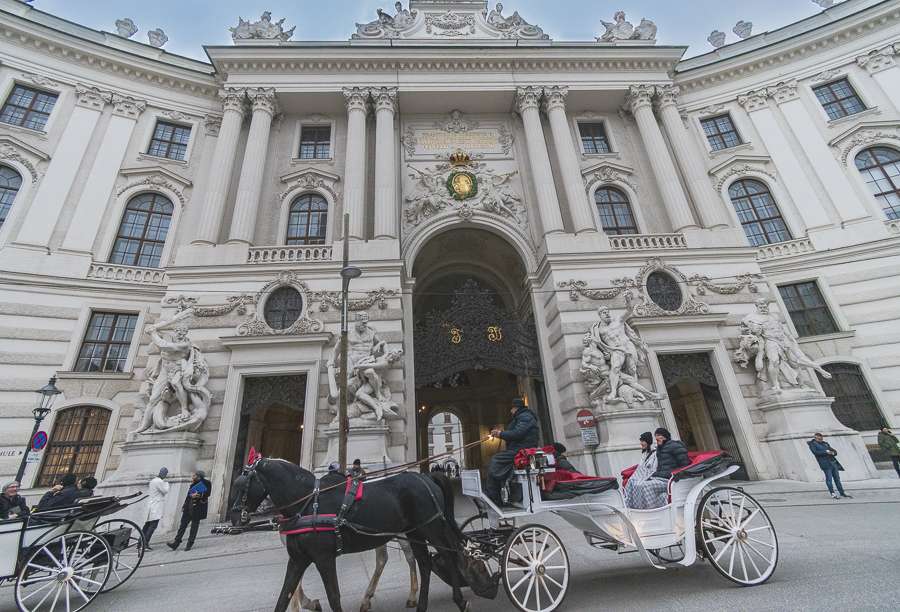
  • Hofburg Palace – Historically, it served as the Habsburgs’ winter residence and was considered the political center of power for the Holy Roman Empire and the Habsburg Dynasty. It’s located at the heart of Vienna’s Innere Stadt municipal district. Today, it offers a wide range of attractions for tourists, many of which require a separate purchase. Two attractions are available on one ticket: the Imperial Apartments of Franz Joseph I and Elisabeth (Sisi), where visitors can view chambers, bedrooms, a living room, a dressing room, a study, and other rooms, and the Sisi Museum that tells Elisabeth’s historical story, accompanied by a collection of her personal items and paintings.

    Visitors can also tour the Imperial Treasury, which contains crowns, weapons, ceremonial regalia, Christian artifacts, jewels, and other Habsburg treasures. Separately, tourists can visit the Spanish Riding School to watch an exercise session or a performance by elite riders on the famed Lipizzaner horses, also known as the dancing horses. Another ticketing option at the Hofburg involves a tour of the Austrian National Library, famous for its beautiful State Hall, a Baroque design measuring nearly 80 meters in length and 20 meters in height. There are also two nearby garden/park areas: Burggarten and Volksgarten.

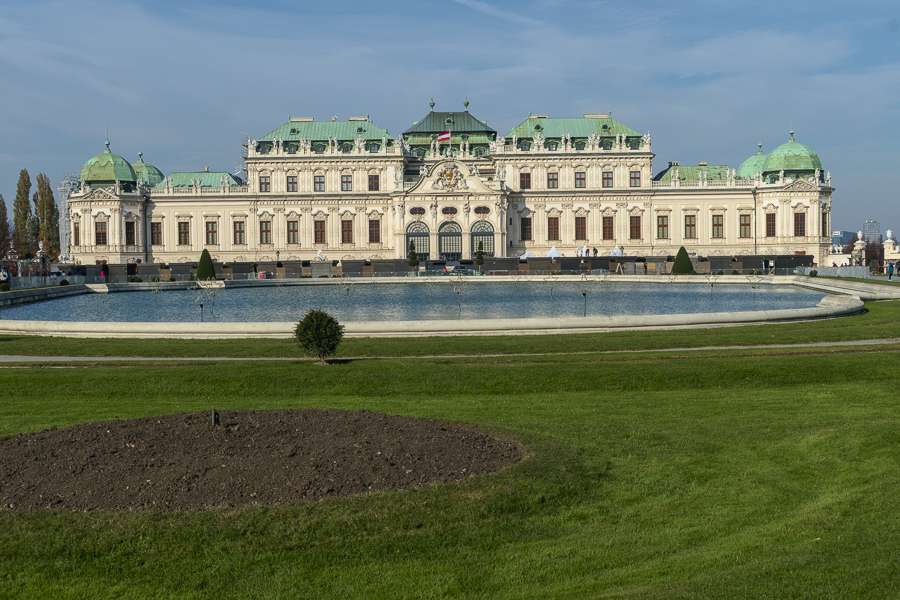
  • Belvedere Palace – Belvedere Palace was the summer residence for Prince Eugene of Savoy, who became the President of the Habsburg Imperial War Council and was a well-known military leader. Maria Theresa acquired the property two decades after Prince Eugene’s death, with the intention of converting it into public museums.

    The Belvedere Palace complex consists of two primary buildings, the Upper and Lower Belvedere, and a late-Baroque French-style garden positioned between the palaces. Today, the Lower Belvedere focuses on Prince Eugene’s residential rooms and an art museum. The Upper Belvedere has been converted into one of Vienna’s most prestigious art museums, including its most famous painting, The Kiss, by Gustav Klimt.

  • Albertina – Former residence of Habsburg Archduke Charles and his wife, Maria Christina, as well as that of their son and the property’s namesake, Archduke Albert. Today, it is a four level museum, with two floor containing permanent exhibitions. One of these holds former state rooms from the Habsburg Dukes/Dutchesses. After sustaining WWII damage, visitors can now see 20 completely restored and fully decorated rooms filled with the opulence you’d expect: silk wall coverings, chandeliers, statues, mirrors, moldings, and many original period furnishings. The second floor housing permanent exhibitions has become a world-class art museum featuring Impressionism, post-Impressionism, and Austrian art, among other periods.

    The Albertina is centrally located in Vienna’s Innere Stadt (if you stay at our recommended Vienna hotel, Hotel Astoria Wien, it’s just a one-block walk). One unique attribute for potential Albertina visitors… on Wednesday and Friday evenings, the museum stays open late, until 9:00 pm.

  • Hermesvilla – Franz Joseph I built and gifted this private country retreat to his wife, Elisabeth (Sisi), completing the house in 1886. Today, the home provides insights into the personal lives of the famous couple through documents, photographs, and their personal belongings. Visitors can see Sisi’s furnished bedroom and the elaborate exercise room. Hermesvilla is on the far outskirts of Vienna, and it’s best reached by rideshare/taxi, as public transportation requires transfers. And after arriving at the main entrance, visitors must still walk nearly one mile to reach the Habsburg residence, which is within a protected nature park.
  • Schönbrunn Palace – The subject of this article is the former summer residence of Habsburg rulers. The public has access to 40 of the palace’s rooms, including magnificent state rooms, the residential wings where Maria Theresa resided, and, separately, the living area of Franz Joseph I and his wife, Sisi. There is also a sizeable main garden area, plus optional gardens that can be accessed on a separate ticket. It is located approximately 3-4 miles outside the Innere Stadt area of central Vienna.
Audience Hall, a Hapsburg State Room, at the Albertina Museum, one of the five Vienna Imperial Palaces

Audience Hall at the Albertina Museum, Vienna

Pre-Travel Checklist

You’re itching to plan that next trip, selecting experiences, tickets, tours, transportation, & hotels… but you should also keep a pre-trip checklist with key considerations. Make your vacation safer and more secure, help overcome logistical challenges, and provide travel diversions between destinations. Don’t forget!

  • Travel Insurance | Faye – Insurance for emergency healthcare, trip cancellation, lost/damaged luggage, rental cars, and adventure sports
  • Digital SIM Card | Airalo – Eliminate the need for physical SIM cards and avoid exorbitant international data plans offered by your existing cellular provider
  • VPN Access | NordVPN – When traveling, add this supplemental layer of security to your public Wi-Fi (i.e.-hotel) usage
  • Audiobooks | Libro – When driving/flying long distances, listening to an audiobook is the perfect distraction (added bonus: a portion of each purchase goes to your local bookstore)

Related Posts

Leave A Comment

Welcome.

We’re Brent and Missy.

Brent and Missy holding their paddles after finishing kayaking in NC

Planning a vacation requires hours of research.

Which destinations are worth visiting? What should you see? What can you skip? Where should you stay? How do you fit it all into one trip?

WE GET IT.

That’s why we study the details, share what we’ve learned, and help you discover the experiences that make a destination special.

Less searching… Better planning… More time enjoying the trip.

5311 1107359
17628 1513819

Popular Posts

creativeref:1110l3642

Social Media

cshow

Recent Posts

cshow
cshow