Comprehensive Austria Travel Guide: Vienna, the Alps, and Other Inspiration

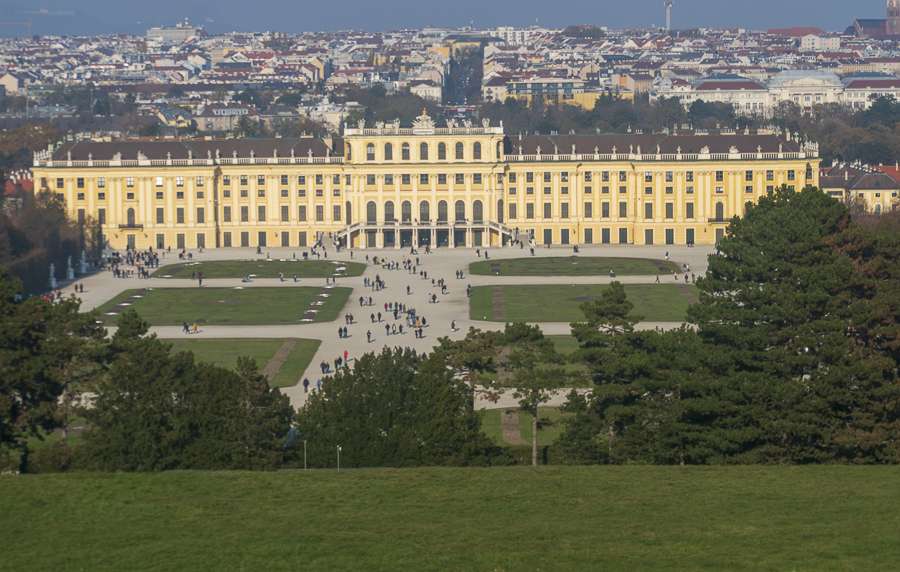
Schönbrunn Palace in Vienna
Our website uses affiliate links. There is no extra cost when you click through and complete a purchase. However, we receive a small commission that helps fund our ongoing travel blogging effort. For further information, review our disclosures.
Table of Contents

Haydn Hall at Esterházy Palace in Eisenstadt
Austria Travel Guide Overview
Austrian history is defined by three periods:
- Austria’s beginnings in 976 to the mid-1200s, known as Babenberg Austria
- The Habsburgs rule from the 1270s to 1918, including a 350+ year period when the majority of Holy Roman Emperors were Habsburgs
- A period of rapid change throughout the 1900s beginning with a 70-80% post-WWI shrinking of the Empire, then its tight relationship with Germans/Nazis before/during WWII, and ultimately a shift to neutrality since the 1950s.
The “empire” created by the Habsburgs was quite unlike those of the British, Spanish, and French, which focused on global colonization, including the Americas. Austria and the Habsburgs broadly expanded through strategic marriage and land acquisition rather than by military conquest. This expansion was confined to European lands, and even though others dwarfed the Empire’s geographical footprint, the Habsburgs’ Austria exerted massive influence in classical music, dance, art, culture, psychology, and the Catholic Church/Holy Roman Empire.
The 1914 assassination of Archduke Franz Ferdinand, heir to the Austrian throne, started World War I. The end of WWI would include an agreement that the Habsburgs would be permanently banned from participating in Austrian governance.
Nowhere is Austria’s historical influence more prominent than in classical music. World-renowned Austrian composers include Franz Schubert, Johann Strauss I and II, Wolfgang Amadeus Mozart, Joseph Haydn, and Gustav Mahler. German-born Ludwig van Beethoven also spent most of his life in Austria. We assure you, there are other classical music legends not from Austria – Bach, Chopin, and Tchaikovsky come to mind. The Viennese Waltz was also created here, and Austria had a tremendous influence on ballroom dance culture from the 1800s to the present.
Within the political arena, Adolph Hitler was Austrian, and three of the most prominent female European royals from the 1700s-1800s – Marie Antoinette, Maria Theresa, and Elisabeth of Bavaria (Sisi) – are linked to the Habsburg dynasty.
Austria’s Sigmund Freud is considered the world’s most well-respected psychologist, while Gustav Klimt is regarded as the most famous artist in the nation’s history. Inventions of well-known global products, such as the Glock semi-automatic pistol, iconic Pez candy, and the Red Bull energy drink and brand, were created by Austrian entrepreneurs.
Within the entertainment world, arguably the most famous Austrian is the bodybuilder, actor, and former California governor, Arnold Schwarzenegger. Austrian actor Christoph Waltz has won two Academy Awards, and the country’s von Trapp family inspired The Sound of Music.
Austria’s sporting heroes largely align with the country’s topography, and the nation’s western Alps have provided the mountainous base for hosting two Winter Olympics in 1964 and 1976. Austria has one of the world’s elite contingents of alpine skiers, particularly on the men’s side, with Hermann Maier, Franz Klammer, Marcel Hirscher, and Benjamin Raich among their most notable stars.
Like most European countries, soccer (or football) generates strong interest among Austrians, both in the professional league, the Austrian Football Bundesliga, and in their national team. Austria’s best squad on the global stage was back in the 1930s.
Visitors to Austria should concentrate on two central themes: the city of Vienna, Europe’s cultural centerpiece, and the awe-inspiring Alps. Vienna offers travelers an abundance of Habsburg Imperial Palaces, a diverse collection of museums, beautiful churches, and majestic venues where the city’s classical music is performed.
For adventure and natural beauty, head to Austria’s western half and the Austrian Alps. Scenic views are available year-round; some of the best are from mountain trams, beautiful drives, hikes, ziplines, alpine coasters, downhill skiing, or tobogganing. Begin your mountain trips from the alpine foothills of Salzburg or Innsbruck, a city surrounded by mountains.
Check out the very best ways to explore Austria throughout this guide!

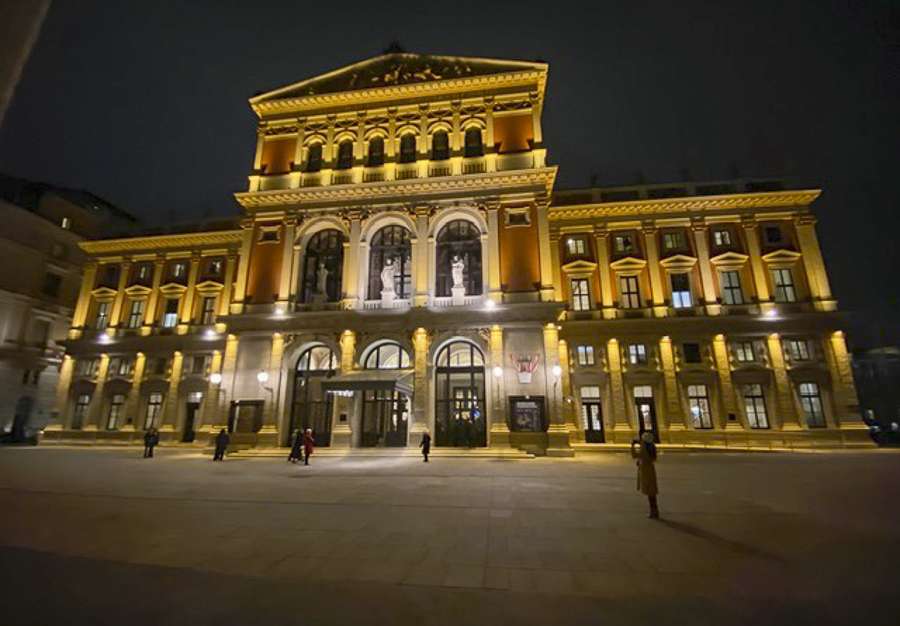
Vienna State Opera
Geography and Logistics
Location
Located in Central Europe.
Austria shares borders with eight other countries. Its two longest borders are with Germany and Czechia, both located to its north. To Austria’s East are Slovakia and Hungary, to the South are Slovenia and Italy, and Switzerland and tiny Liechtenstein to the West.
If you’re traveling to Central Europe, we have you covered with tons of content (more travel guides, trip itineraries, and in-depth articles on major attractions and hidden gems): Hungary, Poland, Slovakia, and, of course, a 5 day Austria travel itinerary.
Size and Population
- Size – 32,387 square miles (very similar in size with the U.S. state of South Carolina)
- Population – 9.2 million people (between that of New Jersey and Virginia, the 11th and 12th most populous U.S. states)
Source: European Union, Directorate-General for Communication
Major Cities and Capital
- Graz
- Innsbruck
- Linz
- Salzburg
- Vienna (Austria’s capital)

Austria Travel Guide: A Map

Major Airports
We’ve identified the country’s busiest commercial airports to provide the most convenient options for starting or wrapping up your next vacation to Austria.
- Graz – Graz Airport (GRZ)
- Innsbruck – Innsbruck Airport (INN)
- Salzburg – Salzburg W.A. Mozart Airport (SZG)
- Vienna – Vienna International Airport (VIE)
- Munich, Germany – Munich International Airport (MUC)*
- Zurich, Switzerland – Zürich International Airport (ZRH)*
*Zurich is ~1 hour drive west of Austria and Munich ~1 hour north of Austria. Both airports may represent attractive starting points for visitors to Austria, and, along with Vienna, are considered major international arrival points.
Time Zone Information
In Austria, daylight saving time moves clocks forward one hour on the last Sunday of March (U.S. daylight saving time begins on the second Sunday of March), and clocks move back one hour on the final Sunday of October (U.S. daylight saving time ends on the first Sunday of November).
Please be careful when scheduling travel during these “shoulder” months. While daylight savings dates are similarly applied across most European countries, the timing is 1-3 weeks different from their comparable U.S. observation dates.
Austria falls within Central European Summer Time-CEST (UTC +2) or Central European Time-CET (UTC +1), depending on the time of year.
UTC, or Universal Time Coordinated, is based on the time at 0 degrees longitude; UTC represents the accepted time benchmark used globally (replacing Greenwich time). Zero-degree longitude essentially represents the United Kingdom, but even this region is at UTC +1 during daylight savings time.

Mariahilf in Innsbruck
Source: ©Innsbruck Tourism/Tommy Bause
Toll Roads
Like many Central European countries, drivers in Austria are required to purchase an e-vignette before driving on a large number of Austrian motorways. Here’s how the process worked for us:
- For visitors to Austria, the appropriate e-vignette can be purchased exclusively online from ASFINAG, an Austrian government-run infrastructure agency.
- A vignette is a requirement for both personal and commercial vehicles. Your rental car (or personal vehicle) falls under the 3.5-ton limit.
- The online form requires minimal input, but you will need both the registration number (identical to your license plate) and the car’s country of registration. For travelers, you most likely won’t have this information until you secure your rental car onsite.
- After picking up your rental car, you will determine the duration of your drive in Austria, most likely choosing either the 1-day, 10-day, or 2-month options.
- Complete your online purchase with an email address and credit card, and your electronic vignette should be processed immediately. The results are 100% digital.
While we understand that vignettes may also be purchased at a point-of-sale system after crossing the Austrian border, we believe this e-vignette process is significantly more manageable and less time-consuming.
For travelers planning to drive in Austria, we recommend obtaining an international driver’s license before your visit (we understand that most rental car companies require it).
Austria may also apply reduced speed limits in certain sections of highway to boost overall air quality. Travelers should be aware of IG-L signage along their route and adjust their driving speeds accordingly.
You won’t need (or want) a rental car if visiting a singular Austrian city. However, if you’re traveling to multiple cities or visiting more rural destinations, a rental car could be beneficial. Driving in large cities like Vienna can be particularly challenging, and we’d recommend parking your rental car for your stay and using local transportation to get around; you can pick it up again when you’re leaving the city.
Key Travel Considerations
Language
German
Currency
Euro (EUR or €)
20+ countries across Europe currently use this standard Euro (EUR) currency, representing approximately 75% of EU member nations. While Austria utilizes the Euro, visitors should note that three of its neighbors have their own currencies: Switzerland, Hungary, and Czechia.
Compare foreign exchange rates between your home currency and planned destination here!
Electrical Plug/Socket Requirements
- Type C (ungrounded) and F (grounded) plugs
- Voltage: 230 volts
- Frequency: 50 Hz
Holidays and Bank Hours
Do you consider “holidays” when you travel internationally? Holidays can significantly impact airline, hotel, and rental car pricing and availability. They can factor into whether your favorite restaurant will be open and if you can access money at a local bank branch.
So before you book, take a look!
- New Year’s Day
- January 1
- Epiphany
- January 6
- Easter Monday
- Monday, Late-March or April
- Labour Day
- May 1
- Ascension Day
- Thursday, 40 days after Easter; early-May or early-June
- Whit Monday
- Monday, 50 days after Easter; mid-May or mid-June
- Corpus Christi Day
- Monday, 64 days after Easter; late-May or late-June
- Assumption of the Virgin Mary Day
- August 15
- Austrian National Day
- October 26
- All Saints Day
- November 1
- Feast of the Immaculate Conception Day
- December 8
- Christmas Day
- December 25
- St. Stephen’s Day
- December 26
**Holiday Notes**
1) Unlike the United States, if an Austria-recognized holiday occurs on weekends (Saturday/Sunday), the observance is NOT shifted to Friday/Monday.
2) If an Austrian holiday falls on a Tuesday or Thursday, the Monday/Friday between the weekend and holiday is known as Fenstertage. Although it is NOT officially deemed a public holiday (or Bridge Holiday), a significant number of Austrians may take off work that day.
Bank Hours
Have you visited an area only to be surprised to discover that banks were closed during certain times? We have – ugh, that was a hard lesson learned.
Relative to other Central European countries, Austrian bank branch opening hours tend to be shorter. In Vienna, bank branches are typically open from 9:00 am to 4:00 pm Monday through Friday. Many of the branches are closed during the lunch hour (noon-1:00 pm).
Outside of Vienna, branch hours may be more limited, with many locations opening only in the mornings from 8 am to noon/1:00 pm Monday through Friday. While other branches may be open 9 am until 3 pm, with 1–1 ½-hour closures during lunchtime. Austrian bank branches are rarely open past 4:00 pm during weekdays and are typically closed on weekends.

St. Stephen's Cathedral in Vienna
Sales Tax or VAT Taxes
For those who are obsessively curious or meticulous with budgeting, we bring you some tax highlights for your destination. Yes, this can matter, as value-added taxes can vary significantly between destinations. In addition, taxes on lodging, gasoline, and other tourism-related expenditures can factor into your financial considerations.
Austria’s standard Value Added Tax (VAT) rate is 20%, an average-to-below average rate at European countries. Certain products are subject to reduced VAT rates of 13% or 10% with hotels and restaurants generally taxed at the 10% VAT rate.
If you are a non-EU citizen and purchase physical products greater than EUR 75 (approximately $85-90), you may be eligible for a refund of VAT taxes (less handling, service, and processing costs).
You must inquire about necessary tax refund forms when visiting a specific vendor, although some retailers will have visible tax-free signage. After completing your purchase, please retain your physical receipts, the tax refund form obtained from the retailer, and the merchandise.
As you depart Austria (or other EU country), an airport customs authority will need to inspect your documentation and the related products. Upon approval, they will provide a stamp or alternative digital validation. You will then need to visit a separate entity in the airport, where you will submit the documentation. Note that this third party processor will charge a service fee that will lower the total amount of your refund.
Weather
The table below provides Austria’s monthly historical average low and high temperatures.
Before you fully accept these temperatures as being every bit as reliable as your local 7-day forecast, we’d mention some nuances to consider:
- Austria has significant topographic variations that impact local weather conditions. The country’s most prominent feature is the Alps, which span the Central, Southern, and Western portions of the country.
- Peak elevations in the Austrian Alps can reach more than 12,000 feet, while the flatter Northeast and Eastern portions of Austria (including Vienna) are generally under 1,000 feet. A good rule of thumb is that for every 1,000 feet of elevation increase, temperatures will be 2 to 5 degrees cooler.
- Within the mountains, elevations (and temperatures) can vary dramatically. For example, the city of Innsbruck lies in the heart of the Alps but still sits at a relatively modest elevation of ~1,800 feet. However, a tram in the surrounding mountains can quickly take tourists to elevations of 7,500+ feet.
| Austria - Average Temperatures | ||
| (shown in Fahrenheit) | ||
| Month | Low | High |
| January | 26 | 37 |
| February | 28 | 41 |
| March | 33 | 50 |
| April | 40 | 59 |
| May | 47 | 65 |
| June | 55 | 74 |
| July | 58 | 77 |
| August | 57 | 76 |
| September | 51 | 67 |
| October | 43 | 58 |
| November | 35 | 46 |
| December | 29 | 38 |
Source: World Data; temperature data reflects 20-year averages

Beautiful sights in Salzburg, view from Mönchsberg of Salzburg's Old Town and the Hohensalzburg Fortress
Source: Tourism Salzburg/Breitegger Günter
Visa Requirements
Austria is a part of Europe’s Schengen area (most EU countries are part of this agreement, as well as several non-EU European nations). Ensure that your passport is valid for more than six months after you enter the Schengen area. This program should allow you to freely move between the various countries without the need for added border checks. Americans can travel to Austria with only a valid passport, don’t require a visa, and can stay up to 90 days within a 180-day time frame.
Most countries in North and South America do not require a visa to visit Austria (or the Schengen area). Visitors from Asian and Oceana countries, including Australia, New Zealand, Malaysia, South Korea, and Japan, also do not require a visa to enter Austria. See this list of countries (and type of visitor) who can enter Austria without the need for a visa, as well as those that will require a visa.
For those traveling to Austria, there are two primary types of Schengen visas: those for stays shorter than 90 days (suitable for most travelers) and those for stays longer than 90 days. If you require a visa, you should apply at the Austrian consulate, or if visiting multiple Schengen countries, you should apply to the country where you will spend the most time. Applications should submitted between 2 weeks and 6 months period before your trip. To move forward on applying for a Schengen visa to Austria, visit Austria’s Washington DC Consulate as a starting point.
News You Can Use…
*HIGH IMPORTANCE IF TRAVELING TO EUROPE IN 2026 AND BEYOND*
European visitors should be aware of new entry initiatives that will impact travel beginning 2025-2026: EES and ETIAS. The first, EES, will involve no additional upfront preparations for travelers but will create added registrations for all Schengen area visitors: EES will collect visitors’ facial images and fingerprints (over time, this is likely to replace the need for passport stamps). In the early implementation, the process of entry/exit to European countries may take longer than previous.
The second, ETIAS, is a new requirement for historically visa-free travelers entering the Schengen area (this will apply to Americans planning a visit to Europe).
EES will be implemented between October 2025 and April 2026, with ETIAS scheduled to be enacted during the 4th quarter of 2026.
Reminder for those traveling from previously visa-exempt countries…. Upon implementation, ETIAS will require these visitors to have travel authorization before entering Schengen countries, including Austria. This authorization will be valid for three years or until the linked passport expires.
The application process will require a EUR 20.00 fee, but those under 18 years old or above 70 years are exempt from this payment. You should apply at least 1-2 months in advance, but many applications will be processed in minutes or a few days. During your travels, your ETIAS authorization will link to your passport.
Required Vaccinations
Currently, no vaccines are required for visitors to Austria. The World Health Organization (WHO) and the United States Centers for Disease Control and Prevention (CDC) provide up-to-date information for travelers. The CDC only recommends routine vaccines for travelers to Austria.
Measles cases have increased globally, and most U.S. measles cases are transmitted to individuals who have traveled internationally. The CDC recommends that all international travelers should have a measles vaccination or have had the disease in the past.
Travelers should recognize that the legality of prescription/non-prescription drugs varies by country. Laws related to narcotics/addictive drugs and psychotropic substances are particularly sensitive. If you have questions about specific prescriptions, please contact Austria’s Federal Ministry of Labour, Social Affairs, Health, Care and Consumer Protection, which controls health regulations in the country.
At a minimum, travelers should take several steps when visiting Austria: 1) label all medicines in their original prescribed containers, 2) do not carry excessive quantities (only pack a reasonable amount for the time you will be abroad), and 3) have your doctor provide a prescription or written and signed copy of your needs for this medicine, including a German translation. Please err on the side of caution here.
For prescriptions involving addictive substances, travelers should take further steps. If staying beyond five days, these prescription drugs can only be brought to Austria with a very specific supplemental form and the quantity cannot exceed a 30-day supply.
Activities and Attractions
Okay, enough of the serious (and largely boring) planning items. Let’s get to the reasons you’re planning this vacation and have some fun!
In the following sections of this Austria Travel Guide, we provide a wide range of ideas for your next vacation that align with our proprietary S-C-H-O-L-A-R approach to travel. Think about adventure (A) and the outdoors (O), history (H), and culture (C), but don’t miss local restaurants (R) and lodging (L) favorites while visiting. And we cannot emphasize enough: be a spectator (S) – attend a festival, a musical, a concert, or a sports event.
Make your vacation unforgettable!

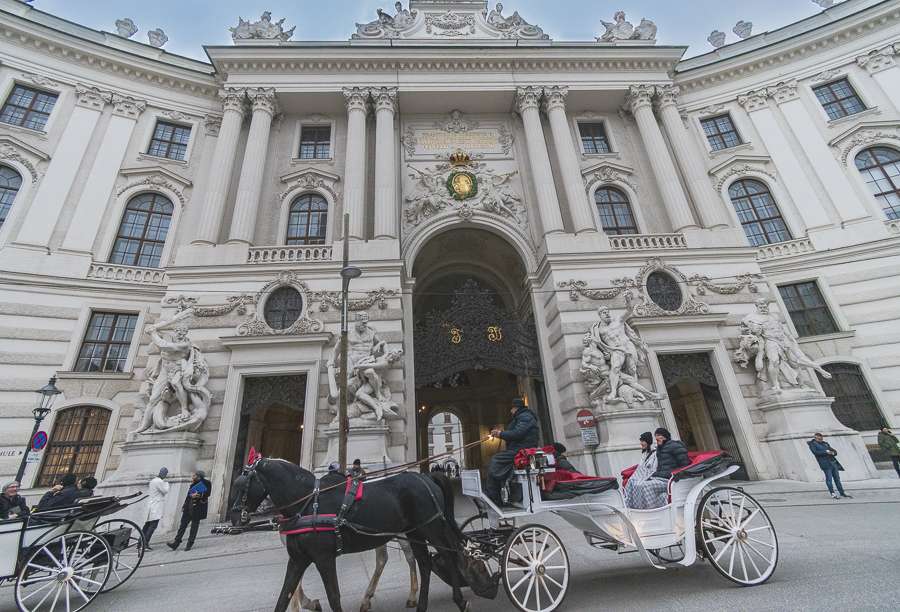
Neue Burg wing of the Hofburg Palace in Vienna
Ten Tourist Attractions to Know
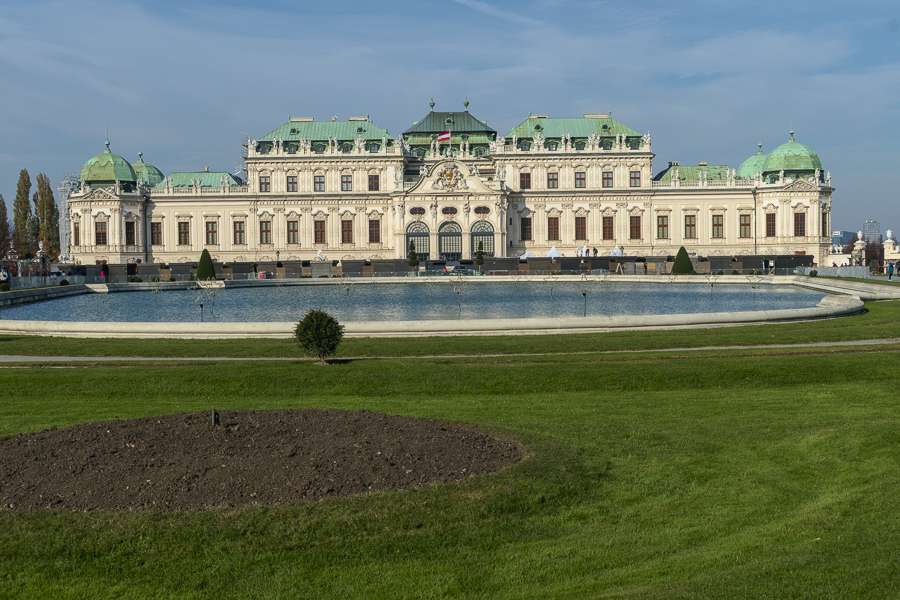
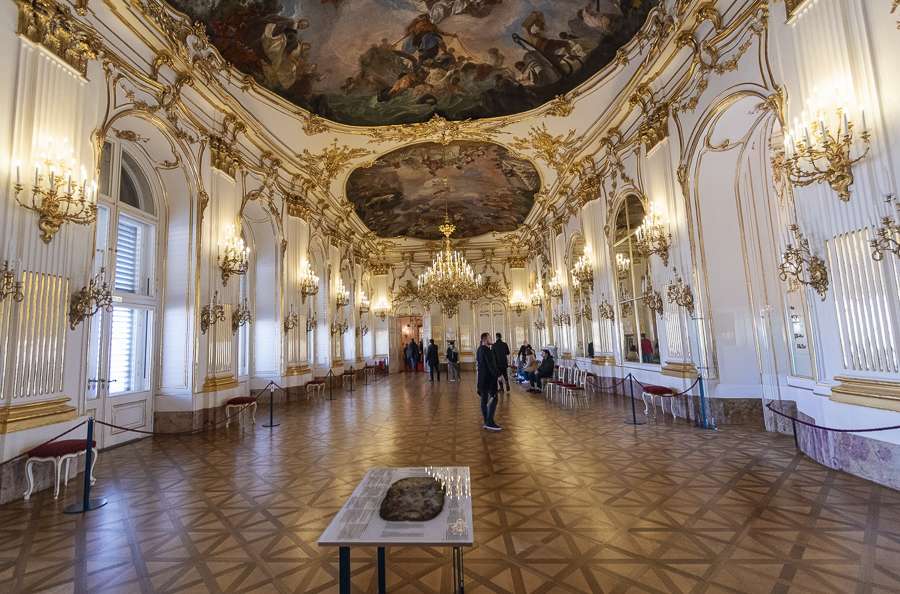
- Austria’s Habsburg Dynasty ruled sizeable parts of Europe from the 13th to the 20th century, and the Imperialist influence is best displayed amongst the Habsburgs’ various Vienna palaces. Schönbrunn Palace and Gardens, the family’s 18th-century summer home, offers the most ornate display and is often compared to France’s Palace of Versailles.
- The Habsburgs’ primary residence and winter home for centuries was the Hofburg Imperial Palace. The family’s largest home is now a massive complex containing a wide range of fascinating museums, attractions, gardens, and squares. Top stops for visitors at the Imperial Palace include the Sisi Museum, Spanish Riding School, and Imperial Treasury.
- With Austrian composers Mozart, Schubert, Haydn, Strauss, and even German-born Beethoven, Austria is the world’s classical music center. Experience this history in many distinct ways: take in a live performance at the Musikverein, Vienna State Opera, or various church concerts, and see performances by the Vienna Philharmonic or the Vienna Boys Choir; visit a museum like Vienna’s House of Music or Mozart’s birthplace and residence sites in Salzburg; and literally jump in with both feet by taking Viennese waltzing lessons.
- Visit Vienna’s medieval church, St. Stephen’s Cathedral. The limestone exterior is Gothic in style, but visitors will also notice Baroque architecture on its High Altar. Visitors can tour both the North and South Towers for excellent city views and a closer look at St. Stephen’s famous colored roofing tiles. The Cathedral’s catacombs are home to more than 70 members of the Habsburg dynasty. Interested in other historic Vienna churches? Consider visiting Karlskirche Wien, as well.
- Austria’s most prominent wine region lies in the Wachau Valley along the Danube River. Visitors come to taste the region’s dry white wines, tour castle ruins and monasteries, including Melk Abbey, and walk the streets of charming Krems, the region’s largest city.
- Eisriesenwelt is the world’s largest ice cave. Visitors enter the dramatic mountain cave after traveling 4,000 feet up by a combination of vehicle, hiking, and cable car. This natural wonder is just 45 minutes from Salzburg!
- The beautiful historic city of Salzburg draws visitors for many reasons. Best reached by a funicular railway, Hohensalzburg Fortress is one of Central Europe’s largest castle complexes. Behind the walls of this 11th-century complex, visitors can take a room-by-room tour, including the Royal Rooms and St. George’s Church. Along the river below, sits Salzburg’s Old Town, where you can walk the narrow cobblestones of Getreidegasse street to discover Mozart’s birthplace and historic shops.
- Although there will undoubtedly be debate, Hallstatt is recognized as Austria’s most picturesque mountain village. With fewer than 1,000 people, the town’s distinctive architecture is Alpine Baroque, and its UNESCO World Heritage status is inspired by its natural setting among towering mountains and along the shores of Lake Hallstatt.
- For visitors, the Austrian Alps are seemingly omnipresent. During summer in the Alps, the mountains are best explored through a wide range of hikes; a scenic drive along Grossglockner High Alpine Road; mountain cable cars and trams, including Nordkette above Innsbruck and Wildspitzbahn taking tourists up the Pitztal Glacier; ziplines amid the mountains at Stoderzinken or the Flying Fox; and the world’s longest alpine coaster, Hoch-Imst.
- Winter in the Alps is no less magnificent: downhill skiing at Ski Arlberg/St. Anton and toboggan experiences at a collection of the world’s longest runs and a great way to appreciate Austria’s alpine beauty – Wildkogel-Arena, Brandnertal, Zillertal, and Stubaital. Most visitors will launch into these winter activities from the Tyrol region’s capital, Innsbruck, which has hosted two Winter Olympics in the past century.

World's longest alpine coaster in Hoch-Imst
Source: Imst Tourism/©Imster Bergbahnen, Wyhlidal, 2022
National Parks
Austria has six designated national parks under the Federal Ministry – Agriculture and Forestry, Climate and Environmental Protection, Regions and Water Management. Here’s an important link including a map and further details on each of the national parks.
- Donau-Auen National Park (Orth an der Donau)
- Gesäuse National Park (Admont)
- Hohe Tauern National Park (Großkirchheim)
- Kalkalpen National Park (Molln)
- Neusiedler See-Seewinkel National Park (Illmitz)
- Thayatal National Park (Hardegg)
UNESCO World Heritage Sites
To be named to the UNESCO World Heritage list, the location must stand out among ten selection criteria with a particular emphasis on critical cultural sites. Approximately 80% of the 1,200+ globally designated areas are culturally focused, the remainder being natural sites. Here’s the list for Austria:
- City of Graz – Historic Centre and Schloss Eggenberg
- Fertö / Neusiedlersee Cultural Landscape
Frontiers of the Roman Empire – The Danube Limes (Western Segment)
- Hallstatt-Dachstein / Salzkammergut Cultural Landscape
- Historic Centre of the City of Salzburg
- Historic Centre of Vienna
- Palace and Gardens of Schönbrunn
- Prehistoric Pile Dwellings around the Alps
- Semmering Railway
- The Great Spa Towns of Europe
- Wachau Cultural Landscape
- Ancient and Primeval Beech Forests of the Carpathians and Other Regions of Europe
Factory Tours
We love a good factory tour… so why not expand the definition further? Many great tours of modern plants, operating facilities, or historically significant factories exist. This is how you get your science, technology, and history knowledge in one visit.
Our approach goes well beyond just a factory, though. We include mining and agricultural operations, utility infrastructure and drilling rigs, government currency and monetary sites, sports arenas (under exceptional circumstances), and scientific facilities and laboratories.
- Steyr | Agricultural Equipment and Tractors | St. Valentin
- Zotter Chocolate | Chocolate | Bergl
- Salzwelten Hallstatt | Salt Mining | Hallstatt
- Schwaz Silver Mine | Silver Mining | Schwaz
- Ybbs-Persenbeug Danube Power Plant | Hydroelectric Power | Ybbs an der Donau
- Palfinger | Cranes and Forklifts | Lengau
- Styx Naturcosmetic | Cosmetics, Chocolate, and Beer | Ober-Grafendorf
Best Spectating Options
Here’s where we get into the “spectating” aspects of travel. Some of our best travel experiences have involved sporting events, food-oriented festivals, state fairs, plays, and outdoor musicals. Off the top of my head, I remember patriotism at a rodeo during the Montana State Fair, an outdoor variety show in North Dakota, an outdoor musical in Missouri, sampling foods at a Chicago festival, watching professional ultimate frisbee in Montreal, seeing Ronaldo score a goal at the World Cup in Moscow, and witnessing the monumental Saudi Arabia upset of Argentina in Qatar’s World Cup.
Admittedly, it’s probably not the first thing you think about when planning a trip, but honestly, this Austria Travel Guide hopes to move them near the top of the list! And because these events are often held at a specific time of year, a particular time each week, and a precise time of day, these must be accounted for at the front end of your travel planning process.

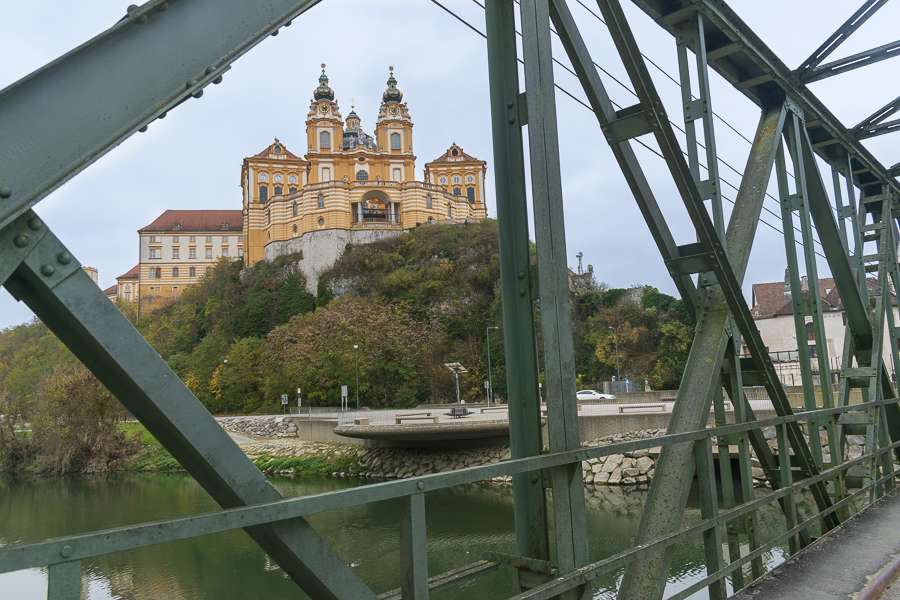
Melk Abbey
Festivals
Let’s start with some potential festivals (and always remember that the individual websites will offer much more detail and timing specifics). Hopefully, these options will give you a starting point and make you consider all the great possibilities.
JANUARY
- Coffee Brewers’ Ball (Vienna)
- Jazzfestival Saalfelden (Saalfelden)
APRIL
- Snowbombing (Mayrhofen)
MAY
- Genuss Festival (Vienna)
JUNE
- Vienna Jazz Festival (Vienna)
JULY
- Donauinselfest (Vienna)
- Salzburg Festival (Salzburg)
- Bregenz Festival (Bregenz)
- Pflasterspektakel (Linz)
- Innsbruck Festival of Early Music (Innsbruck)
SEPTEMBER
- ImPulsTanz International Dance Festival (Vienna)
- Almabtrieb/Cattle Drive (Numerous Alpine Communities)
- Vienna Kaiser Wiesn (Vienna)
- St. Johann Dumpling Festival (St. Johann)
NOVEMBER-DECEMBER
- Christmas Markets (Throughout Austria)
- Aufsteirern (Graz)
- Krampus Parades (Innsbruck)
Best Entertainment Venues
In this section, we spotlight grand, attractive, or distinctive venues where you can see a performance, an opera, symphony, ballet, orchestra, dinner theatre, musical, variety show, play, etc. Essentially, any live performance. If you will be traveling to one of these cities/regions during your vacation, pop onto the venue’s website and see what’s happening that week or that night. You might end up turning a vacation evening in front of the hotel television set into something far more memorable.
- Musikverein (Vienna)
- Vienna State Opera (Vienna)
- Vienna Konzerthaus (Vienna)
- Mozart House (Vienna)
- Schönbrunn Palace (Vienna)
- Ronacher & Raimund Theater (Vienna)
- The Arena Vienna (Vienna)
- Volksoper (Vienna)
- Theater an der Wien (Vienna)
- Stefaniensaal (Graz)
- Graz Opera House (Graz)
- Marble Hall at Mirabell Palace (Salzburg)
- Great Festival House (Salzburg)
- Landestheater (Linz)
- Esterhazy Palace (Eisenstadt)
- Wolkenturm at Grafenegg (Grafenegg)
Sports Teams and Events
This might be our favorite section. We love sports. All types of sports. From the most significant sports events held worldwide to lower-profile sports to events that might only be significant locally. And even if you’re not a sports fanatic, don’t pass on the opportunity to soak in the atmosphere and local culture, partake in those traditional stadium/ballpark/arena foods, or simply engage in that age-old sport of people watching (there might be someone in our family who does precisely this at most sporting events).
We’ve searched the most relevant sports across professional and collegiate platforms, using relative attendance and performance history as our screening tools for inclusion in the table below. We hope we haven’t excluded a critical event or team, but if you think so, please drop us a line (and correct us). We’d hate to miss an opportunity to witness (or suggest) something great!
| Austria - Sports Events to See | ||||
| Sport | League/Level | Team/Event Name | City | Time of Year |
| Skeleton/ Bobsleigh | International Bobsleigh and Skeleton Federation (Pro) | Various Skeleton and Bobsleigh Events Held Throughout the Season | Innsbruck | November-February |
| Ice Stock Sport (similar to Curling) | International Federation Icestocksport (Pro) | European Cup | Winklarn | June |
| Womens Tennis | WTA Tour (Pro) | Upper Austria Ladies | Linz | April |
| Mens Tennis | ATP Tour (Pro) | Generali Open | Kitzbuhel | July |
| Mens Tennis | ATP Tour (Pro) | Erste Bank Open | Vienna | October-November |
| Auto Racing | Formula One (Pro) | Austrian Grand Prix | Spielberg | June |
| Mens Soccer | Austrian Bundesliga (Pro) | Sturm Graz | Graz | August-March |
| Mens Soccer | Austrian Bundesliga (Pro) | Red Bull Salzburg | Salzburg | August-March |
| Mens Soccer | Austrian Bundesliga (Pro) | Rapid Wien | Vienna | August-March |
| Mens Soccer | Austrian Bundesliga (Pro) | Austria Wien | Vienna | August-March |
| Ice Hockey | ICE Hockey League (Pro) | Red Bull Salzburg | Salzburg | September-February |
| Ice Hockey | ICE Hockey League (Pro) | EC KAC | Klagenfurt | September-February |
| Downhill Skiing (Slalom, Giant Slalom, Downhill, Super-G) | FIS Alpine Ski World Cup (Pro) | Numerous Events | Locations Mostly in Central & Western Austria | October-March |
Dining and Food Options
For this article’s purpose, this is not the place to highlight specific restaurants, roadside diners, or the finest culinary opportunities. Instead, we want to signal several key factors to consider: tipping protocols, approximate time range for meals, and most importantly, gaining a clear understanding of the foods a particular country is known for (i.e., maybe, just maybe, we’d remind you to order pizza when visiting Chicago).
When dining in Austria we suggest lunch at 12 pm – 2 pm and dinner from 6 to 9 pm. Tipping in Austria will be different for American tourists, as servers usually bring a remote payment system to your table. There may not be an option to tip within the system, so carry physical currency during your travels; servers will also appreciate cash tipping. It is common to tip a small amount (several Euros, for example) or compute roughly 10% of your bill. When using a credit card, you may also instruct a server to round up your bill or add several Euros before final payment.
We consider two quintessential Austrian dishes: Viennese schnitzel and Tafelspitz (boiled beef). The most traditional Austrian schnitzel is breaded veal, known as Viennese Schnitzel; however, pork Schnitzel is nearly as popular, and both are usually available at restaurants.
Schnitzel accompaniments nearly always include parsley potatoes, or potato salad, plus a side of cranberries. Tafelspitz, or boiled beef, is usually served with multiple vegetables (potatoes or root vegetables), creamed spinach, and two sauces: apple horseradish and a creamy chive sauce. For dessert, apple strudel is the most popular choice among locals and tourists.
While the above items are the must-haves during your visit, regional cuisines within Austria are further shaped by topography, history, and proximity to other countries. In the Alps, visitors will find heavier comfort foods, dumplings, a wide range of cheeses, and even fondue (a broth, cheese, and chocolate dish) inherited from their Swiss neighbors. Regions closer to the German border may offer a wider variety of bratwurst and sausages on menus, and the uber-popular Central European walk-around dessert, the chimney cake, can be found in Vienna near the Hungarian border.
Wrapping Up
Hopefully, this “travel guide” will provide some direction and possibly even uncover unique inspirations for your travels. These state/country-specific travel guides represent one key piece of our travel blog. They are intended to complement our more precise trip itineraries (here’s our Vienna itinerary) and individual location publications. Read them all or skim the materials now, bookmark them, and return later; our feelings will never be hurt!
We’ve provided some additional resources (with links) for you below. Have a great vacation!

Kühtai, Tyrol
Source: ©Innsbruck Tourism/Eye5 (Photo by Jonas Schwarzwälder/Jonas Schwarzwälder Photography)
Related Posts
Welcome.
We’re Brent and Missy.

Planning a vacation requires hours of research.
Which destinations are worth visiting? What should you see? What can you skip? Where should you stay? How do you fit it all into one trip?
WE GET IT.
That’s why we study the details, share what we’ve learned, and help you discover the experiences that make a destination special.
Less searching… Better planning… More time enjoying the trip.


Popular Posts



Social Media

Recent Posts